Saturday, December 27, 2025
In the world of Blackjack, the term “Card Counting” is frequently mentioned and viewed from many different angles. Among these, the perspective of probability and statistics is indispensable. So, what exactly is Card Counting? How is it interpreted through a statistical lens? Right now, you can explore the following detailed analysis to fully grasp this method.
Card Counting in Blackjack is simply understood as the process of tracking the cards dealt to gain an advantage. It is a method and technique that, when applied correctly, can provide you with a high Expected Value (EV). The essence of this technique is to estimate the probability of the remaining cards in the deck being dealt next.
What is card counting in the game of Blackjack?
To be clear, Card Counting is not a method for predicting exactly which card will be dealt next. Instead, it serves to estimate the ratio and probability of “good” versus “bad” cards likely to appear. Consequently, you can adjust your bet sizing appropriately and implement a more effective overall strategy.
In basic terms, Blackjack cards are categorized into three distinct groups: High Cards (10, J, Q, K, A): These provide a significant advantage to the player (as they increase the chances of getting a natural Blackjack or the dealer busting). Neutral Cards (7, 8, 9): These have a minimal impact on the game’s momentum. Low Cards (2 through 6): These favor the dealer (as they help the dealer complete weak hands without busting).
By tracking the cards that have already been dealt, you simply add or subtract points to determine the Running Count. This value helps you estimate whether the remaining deck is “rich” in high or low cards. When high cards appear on the table, the Running Count decreases (becomes more negative). This reflects that the remaining deck now contains a higher concentration of low cards. Conversely, if the Running Count is positive, it signifies that many low-value cards have already been played. This means high cards have a higher probability of appearing in the upcoming rounds.
Gaining a clear understanding of Card Counting through a statistical lens will empower you to approach Blackjack with greater confidence. You can refer to the following analysis and illustrative examples.
From a statistical standpoint, Card Counting is a problem of Conditional Probability. This technique is not performed based on intuition or prophecy; rather, it is a systematic mathematical approach to calculating probabilities.
Accordingly, every time a card is dealt and revealed, the composition of the remaining deck shifts. This means that the probability of specific cards appearing in subsequent rounds changes dynamically based on the cards that have already been removed from play. Unlike games with “independent trials” (like Roulette), Blackjack has a “memory”, where past events directly influence future outcomes.
Card Counting from a Statistical Perspective
Typically, if the cards dealt consist of many high cards, the probability of those cards remaining in the deck decreases. Consequently, your chances of hitting a Blackjack in the next round will also diminish. Conversely, if the revealed cards are low-value, the probability of drawing a high card increases, granting you a significant advantage.
To better understand Card Counting from a statistical perspective, consider the following simple example:
Assume you are playing Blackjack with a standard 52-card deck using the Hi-Lo system, where: Low cards = +1, Neutral cards = 0, and High cards = -1.
In Blackjack, Card Counting and Expected Value (EV) are inextricably linked. You can rely on Card Counting to estimate your EV and identify moments where you hold the advantage. From there, you can adjust your bankroll allocation and make more accurate tactical decisions at specific points in the hand. This systematic approach allows you to play Blackjack intelligently while mitigating risks.
Card counting helps you reduce risk when playing.
To maximize your advantage, you should integrate Card Counting with Basic Strategy. For instance, if the Running Count is significantly positive, you might proactively Double Down or Split in situations where you wouldn’t normally do so. Conversely, if you calculate a negative Running Count, you should avoid placing large bets to minimize potential losses.
Furthermore, please note that Card Counting does not guarantee a win; it only provides a slim mathematical edge. From a statistical perspective, this method has several limitations, including:
The information above provides an analytical look at Card Counting from a statistical perspective. We hope you have gathered useful insights to apply when playing Blackjack for rewards at Sunwin. However, please keep in mind that all the information provided is for objective reference only.
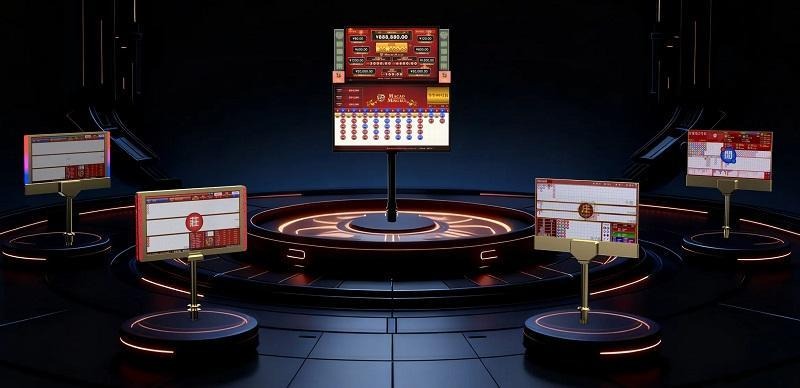
If you have ever entered a Live Baccarat lobby on Sunwin, you will notice various charts at the bottom of the screen filled with red, blue, and yellow circles. These are Roadmaps, commonly referred to as “scoreboards” or “road galleries.” While many players view these as the “secret key” to predicting the next round, in reality, it is a data system with its own strengths and inherent limitations. Understanding Roadmaps...
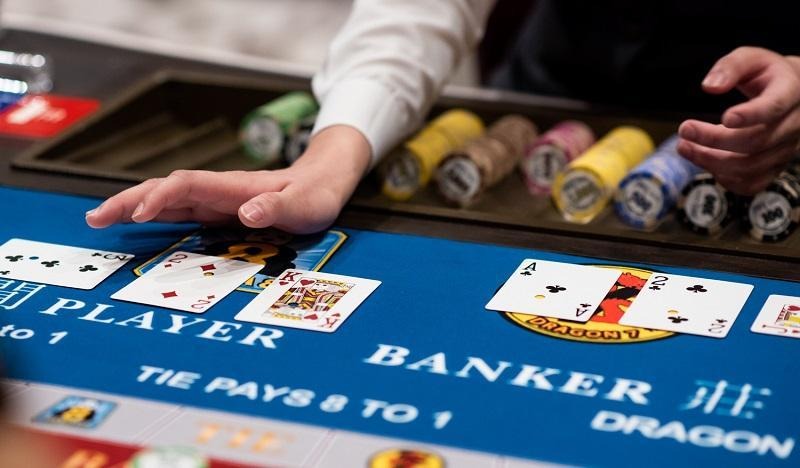
In Baccarat, mastering the betting options is the foundational element before building any strategy. The game revolves around three primary choices: Banker, Player, and Tie. Each bet carries distinct characteristics regarding mathematical probability and winning rates. In this article, let’s join Sunwin in exploring these details to help you place your bets with precision! 1. The Banker Bet (House) The Banker is typically denoted by the red color on the...

Blackjack is inherently one of the casino games that offers a high win rate compared to many other forms of entertainment. However, at its core, Blackjack remains a game of chance, and behind every hand lies the House Edge. Only when you correctly perceive the House Edge in Blackjack can you make rational decisions and avoid unrealistic expectations. 1. Understanding What House Edge in Blackjack Is House Edge refers to...