Saturday, December 27, 2025
In Blackjack, not every decision is based purely on the total score. In fact, two players with the same total might make completely different choices. The reason for this lies in the concepts of Soft Hand and Hard Hand. These are core elements that help players identify the context of their hand to make accurate decisions and minimize risk. Let’s dive into the details of what Soft Hands and Hard Hands specifically are.
Blackjack is a casino game using a standard 52-card deck, where the goal is to achieve a total score as close to 21 as possible without exceeding it. During gameplay, the terms “Soft Hand” and “Hard Hand” arise based on the presence and the scoring method of the Ace. To take initiative in every round, you first need to master these definitions:
Understanding what Soft Hand and Hard Hand are
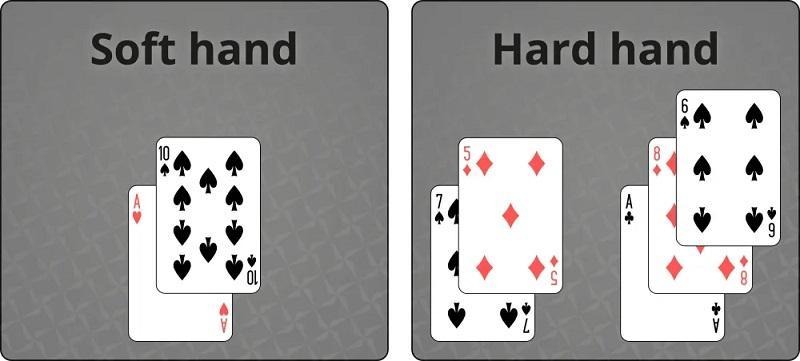
A Soft Hand refers to a hand that contains at least one Ace. In a Soft Hand, the Ace can be counted as either 11 or 1, depending on the player’s situation.
For example, a Soft Hand is when you have an Ace + 6 = Soft 17, or an Ace + 5 + 2 = Soft 18. If a player draws an additional card and the total score exceeds 21, the Ace will automatically convert its value to 1 point to prevent the hand from Busting.
Thanks to the flexibility of the Ace under Blackjack rules, a Soft Hand provides a high margin of safety when drawing more cards. Furthermore, players can flexibly adjust their scores and take more initiative in their strategic planning. This hand is always ideal for making exploratory or aggressive tactical moves.
In contrast to a Soft Hand, Hard Hand is the term for a “stiff” or “rigid” hand. This means the hand either does not contain an Ace or contains an Ace that must be counted as 1 point.
For example, 10 + 8 = Hard 18, or Ace + 7 + 10 = Hard 18. In these situations, if you draw another card and the total exceeds 21, you will Bust immediately without any opportunity to adjust the score.

Hard Hand is a strong player.
Consequently, a Hard Hand is a less flexible hand that carries more risk when drawing new cards. Every decision made with a Hard Hand requires more caution, demanding that players accurately read the context and avoid acting on emotion. This is also a hand that depends heavily on the Dealer’s upcard.
Unlike other casino games, in Blackjack, two hands with the same total score but different compositions will lead to different decisions. This depends on whether you are holding a Soft Hand or a Hard Hand. For example:
With a Soft Hand, players generally have an advantage thanks to the flexibility of the Ace. In many cases, deciding to draw another card is a way to improve the total score rather than missing an opportunity. Specifically:

Mastering the terminology of two-hand poker will help increase your chances of winning.
Conversely, a Hard Hand requires players to adopt a much more cautious approach. Without the “safety net” of an Ace, every additional card drawn carries the inherent risk of exceeding a total of 21. In the context of a Hard Hand, the game’s situation—especially the Dealer’s upcard—plays an extremely vital role. You must carefully weigh the probabilities instead of simply looking at your current total. The standard principles to apply are:
The difference between a Soft Hand and a Hard Hand in Blackjack goes beyond simple addition. Instead, it involves an entire decision-making process based on the context of the hand. Many players frequently make the following serious mistakes:
These small errors often lead to unnecessary losses, especially in fast-paced games. However, at Sunwin Blackjack tables, the status of Soft/Hard hands is usually clearly displayed, making it much easier for new players to identify their situation.
In essence, Soft Hand and Hard Hand are not just theoretical concepts; they are the vital foundation for making critical decisions in Blackjack. Once you clearly understand these two types of hands, you will create a proactive advantage for yourself and confidently experience Blackjack at Sunwin.
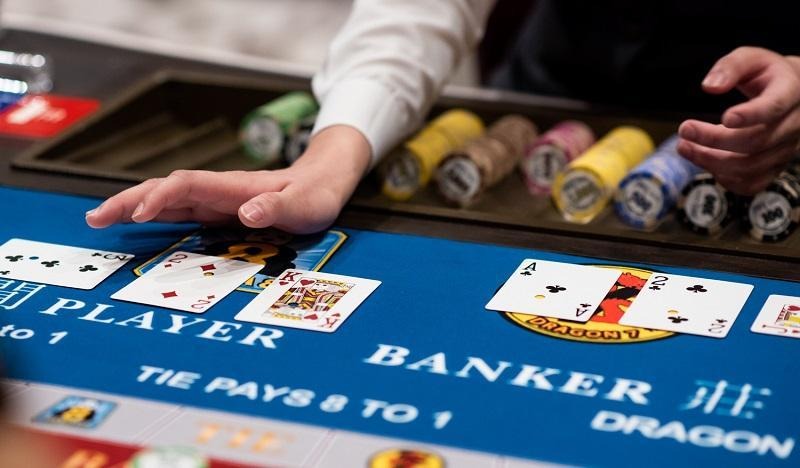
In Baccarat, mastering the betting options is the foundational element before building any strategy. The game revolves around three primary choices: Banker, Player, and Tie. Each bet carries distinct characteristics regarding mathematical probability and winning rates. In this article, let’s join Sunwin in exploring these details to help you place your bets with precision! 1. The Banker Bet (House) The Banker is typically denoted by the red color on the...
In Baccarat, there is a term that every professional player must master: House Edge. This is considered the key to deciphering why certain betting options yield better and more sustainable profits than others. Understanding House Edge will completely transform your approach to the game and provide you with a more accurate strategic direction. 1. What is House Edge? House Edge, known in Vietnamese as “lợi thế nhà cái,” is—simply put—the...
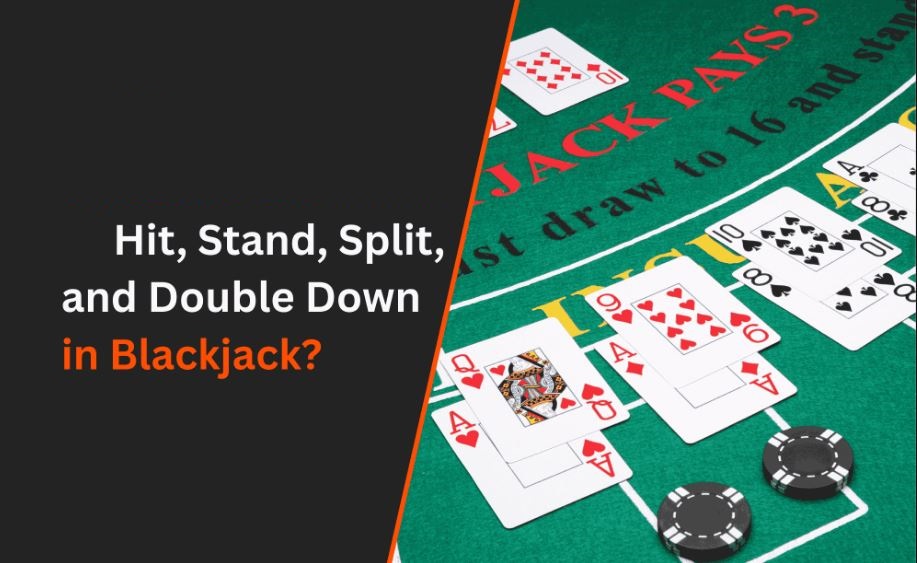
Blackjack Sunwin is a game deeply rooted in chance. However, in reality, winning or losing does not only depend on the cards dealt but relies heavily on the decisions players make during each turn. With just four choices—Hit, Stand, Double, and Split—a player can completely change the outcome of a hand. Therefore, to become a Blackjack pro, you must understand and know how to use these four options to build...