Sunday, December 28, 2025
Sports betting is a form of entertainment with a high degree of risk. Outcomes depend not only on the strength or form of a team but are also influenced by various factors, most importantly Line Movement and Market Adjustment. So, what are they, and how do they impact the way the betting market operates? In this article, Sunwin will clarify everything to give you the most comprehensive overview.
Line Movement refers to the shifts in betting lines, including Odds, Handicaps, and Over/Under. More accurately, it is the phenomenon where the betting ratios of a sporting event fluctuate in real-time. These changes can occur at various stages: long before the match, leading up to kick-off, during the match (live betting), or even in response to final pre-match developments.

What is Line Movement & Market Adjustment?
For example: Team A’s handicap increases from -0.25 to -0.50, or their payout rate drops from 1.95 to 1.80. This shift reflects market liquidity and money flow rather than just a simple prediction of the final score.
Market Adjustment, on the other hand, is the process by which bookmakers recalibrate betting odds to mitigate risk when there is a significant imbalance in money flow. The primary objectives of Market Adjustment are to balance the total wagers between both sides, minimize the house’s liability, and reflect updated information (lineups, injuries, weather, etc.).
Essentially, when a majority of bettors back one side, the bookmaker lowers the odds for that outcome and raises them for the opposing side to attract more action. In doing so, the house can balance its books and secure a profit regardless of the match result. In this context, Market Adjustment is the strategic response, and Line Movement is its visible result.
In the sports betting market, Line Movement and Market Adjustment are the core factors governing how the betting board operates in real-time. These aren’t just arbitrary numbers going up or down; they represent the market’s self-correcting process in response to new data and capital flow.
In essence, the betting market functions like a micro-financial market. When a line is opened, bookmakers rely on data, probabilities, and statistical models to set the “Opening Odds.” As soon as betting activity commences, the system automatically adjusts the rates. If an excessive amount of capital flows into one specific bet, the line must move to maintain risk equilibrium. Thus, Line Movement emerges as the market’s natural reflex.

How do line movement and market adjustment affect the sports betting market?
In the meantime, Market Adjustment is implemented to balance the risk across all outcomes. Instead of trying to predict the final result, the bookmaker adjusts the lines to redistribute the money flow, avoiding excessive risk concentration on a single side. This ensures the betting market maintains stability, transparency, and smooth operation.
While understanding Line Movement & Market Adjustment does not guarantee a win, it empowers players to approach the sports betting market with a more sober, logical, and strategic mindset.
Many bettors mistakenly believe that a sharp movement in the lines is a “golden signal” for the match result. However, this is a fundamental misconception. In reality, every change on the betting board merely reflects the capital flow and new information impacting the market at a specific moment. Line movement is not an absolute confirmation of who will win.
Line Movement & Market Adjustment are created with a clear purpose: to allow the market to self-balance. They assist bookmakers in distributing risk and stabilizing the betting volume throughout the process. These adjustments serve the dynamics of supply and demand, not as a tool for precise result forecasting.
Therefore, players must grasp the true nature of these influencing factors to make the safest and most effective betting choices. Only when you understand the essence of Line Movement & Market Adjustment can you avoid blindly following the crowd and approach sports betting with a more grounded and realistic perspective.

Line Movement & Market Adjustment reflects market conditions, not predicts outcomes.
The above is a comprehensive reveal of Line Movement & Market Adjustment, along with their direct impacts on the sports betting market. We hope players can now grasp the true essence of each attribute to improve their odds-reading accuracy and avoid making hasty betting decisions based on superficial fluctuations. To track betting line changes in the most professional and transparent manner, visit Sunwin today.
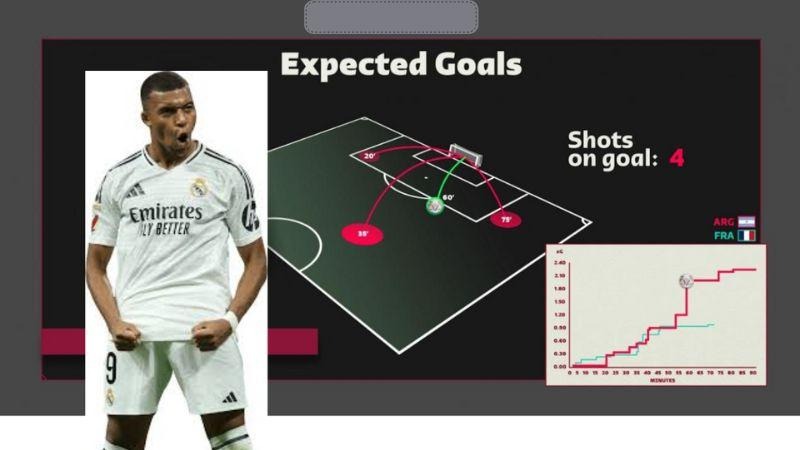
In modern football, experts, coaches, and fans use numerous metrics to dissect a match. One of the most prominent is Expected Goals (xG). So, what exactly is Expected Goals? How is it calculated, and what role does it play? Let’s dive into this in-depth analysis to gain a more accurate perspective when analyzing football data. 1. What is Expected Goals (xG)? Expected Goals, commonly abbreviated as xG, is a key...

In the world of sports betting, Implied Probability and Margin are two terms you must master. These concepts are the keys to making smart investment decisions and avoiding unnecessary risks. Let’s dive into the details below. 1. What is Implied Probability? Simply put, Implied Probability is the “hidden likelihood” within a bet. It is the process of converting betting odds into a percentage that represents the bookmaker’s assessment of an...

In modern sports betting, winning or losing a single bet is no longer the sole measure of a player’s ability. Instead, experts use a metric called Closing Line Value (CLV) to measure and evaluate the quality of a wager. Let’s dive into the details to understand how this metric works. 1. What is Closing Line Value (CLV)? In simple terms, Closing Line Value (CLV) is a metric used to assess...