Saturday, December 27, 2025
In modern poker, correctly reading board texture is not just an advanced skill but the very foundation for making accurate post-flop decisions. By clearly understanding whether a board is “dry” or “wet,” its relationship with ranges, and the advantages held by each side, players can become more proactive in every situation. This knowledge is particularly useful when practicing and refining tactical thinking on online poker platforms like Sunwin.
In poker, Board Texture is a concept used to describe the structure and characteristics of the community cards that appear on the table, typically analyzed starting from the flop and continuing through the turn and river. Board texture does not just indicate what the board “looks like”; more importantly, it informs players who the board favors, which range it benefits, and which strategy should be applied.
To put it simply, board texture reflects how “dry” or “wet,” connected or disconnected, and dangerous or safe a board is. A board with little potential for straights or flushes is considered dry, while a board with consecutive cards or cards of the same suit is considered wet. this distinction directly influences decisions to bet, call, or fold post-flop.
The core point of board texture is this: it is not evaluated in isolation but is always linked to the players’ ranges. On the same board, the advantage can be entirely different if you were the pre-flop raiser compared to when you were simply the caller. Therefore, analyzing board texture is a critical intermediate step that connects range thinking to post-flop decisions.
Novice players often only look at their own hole cards and react emotionally. In contrast, skilled players look at the board first and ask: Whose range does this board fit? How many strong hands can exist? What is the probability of hand improvement in the following rounds? When you correctly understand board texture, you will know when to bet for value, when to bluff, and when to control the pot.
Consequently, board texture is considered the foundation of every effective post-flop decision in modern poker.

What is Board Texture in Poker?
In board texture analysis, a dry board refers to a community card structure that is disconnected, with low potential for creating strong hands or dangerous draws. The easily recognizable characteristics of a dry board are cards that are non-consecutive and of different suits, making the formation of a straight or a flush difficult. Typical examples are boards like $K \spadesuit 7 \diamondsuit 2 \clubsuit$ (rainbow) or $Q \heartsuit 9 \diamondsuit 2 \spadesuit$. These structures significantly limit the number of hands that can connect strongly with the table.
Dry boards typically offer an advantage to the pre-flop aggressor because their range contains more high-value hands compared to the caller. Since very few draws exist, the likelihood of an opponent continuing with weak hands is low. Therefore, dry boards are particularly suitable for high-frequency continuation betting (c-bet) with moderate bet sizing. Furthermore, bluffing on a dry board is more effective because opponents find it difficult to justify a long-term call without actual value hands.
Conversely, a wet board refers to a structure with high connectivity, creating numerous possibilities for both made hands and draws. Structures such as $J \spadesuit 8 \spadesuit 6 \heartsuit$, $K \diamondsuit J \spadesuit 9 \heartsuit$, or $Q \clubsuit J \heartsuit T \spadesuit$ open up a wide array of straight, flush, and strong draw possibilities. On these boards, the ranges of multiple players can interact well with the cards, causing the relative strength of hands to shift rapidly through each betting round.
Wet boards significantly reduce fold equity at the flop because opponents often have legitimate reasons to call with draws or marginal hands. Consequently, continuation betting requires more careful consideration regarding frequency and sizing. At the same time, wet boards allow for flexible decision-making on the turn and river, such as converting marginal value hands into bluffs when draw-completing cards appear. The ability to read and adapt to wet boards is the defining factor that distinguishes skilled players from those who play by simple patterns.
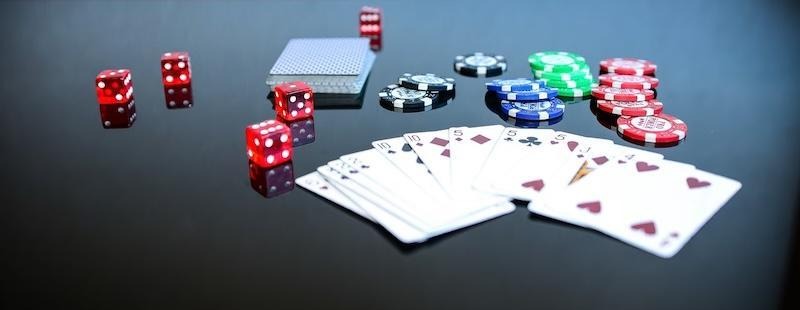
The concepts of “dry” and “wet” in board texture.
Understanding board texture plays a pivotal role in every post-flop decision a poker player makes. The structure of the community cards does not merely indicate the danger level of the board; it determines who holds the range advantage right at the flop. Once you have defined your opponent’s range from pre-flop actions, reading the board texture helps you accurately assess which range connects better with the table, allowing you to choose the appropriate betting strategy.
On boards with a high probability of creating strong hands, fold equity typically decreases because opponents are more likely to hold draws or hands with improvement potential. Conversely, if the board texture fits your range but does not support your opponent’s, you can proactively exert pressure through continuation bets or planned bluffs. The key point is this: you do not act based on an isolated hand, but on the interaction between range and board.
Understanding board texture also helps you plan the entire hand, from the flop through the turn and river. You will know when to continue barreling, when to control the pot, and when a marginal hand can be effectively converted into a bluff. This is the defining difference between a strategic thinker and a player who simply reacts with basic ABC poker.
It is no coincidence that top-tier poker professionals place special emphasis on board analysis. Practicing board texture reading daily helps them develop a sharp intuition, enabling them to make precise decisions regarding betting frequency, sizing, and long-term plans for every hand.

How important is understanding board texture?
Board texture has a direct and profound connection to every post-flop decision in poker. After pre-flop actions have partially defined the ranges of each player, it is the board structure that dictates the subsequent strategy: whether to bet or check, use a small or large bet sizing, and whether to play for a single street or plan for multiple betting rounds ahead.
On dry boards, where the cards are disconnected, the advantage typically belongs to the player with the stronger and more condensed pre-flop range. In these situations, high-frequency continuation betting (c-bet) is often highly effective because opponents rarely hold a hand strong enough to continue. Post-flop decisions on dry boards usually focus on exerting early pressure, leveraging fold equity, and ending the hand quickly.
Conversely, on wet boards with numerous possibilities for straights, flushes, or two-pair, post-flop decisions become significantly more complex. The frequency of opponents holding draws or high-potential hands increases sharply, making pure bluffing less effective. At this stage, players must carefully weigh protecting their hand, controlling the pot size, and preparing scenarios for the turn and river. An unplanned continuation bet on a wet board is easily exploited by check-raises or persistent calls.
Most importantly, board texture should not be viewed in isolation. It must always be placed in relation to your range and your opponent’s range. On the same board, if your range connects better, you can play proactively; if not, playing defensively or choosing to fold early may be the optimal decision. Understanding this relationship allows you to make post-flop decisions that are grounded in logic, consistent, and offer a long-term advantage.
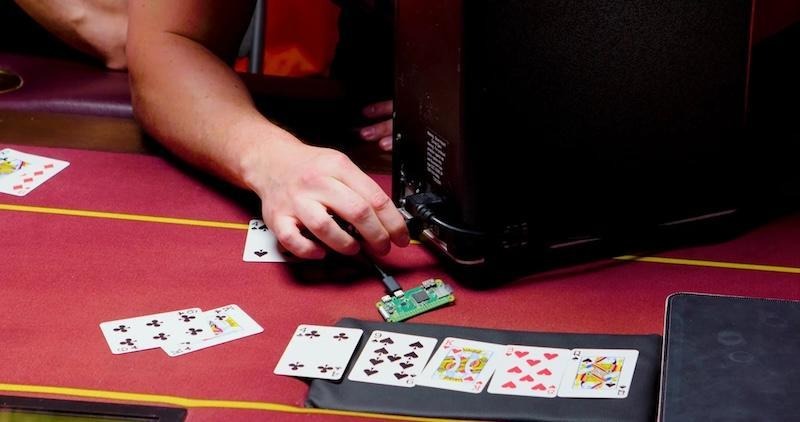
Board Texture and its Relationship to Post-Flop Decisions
In summary, understanding and analyzing board texture is the foundation for making accurate post-flop decisions in poker. By correctly combining the board structure with range thinking, players can build more effective strategies for betting, bluffing, and pot control. This is also the factor that distinguishes skilled players from those who play based on intuition. If you want to train your poker analytical mindset systematically, platforms like Sunwin provide a suitable environment to apply and perfect these skills.
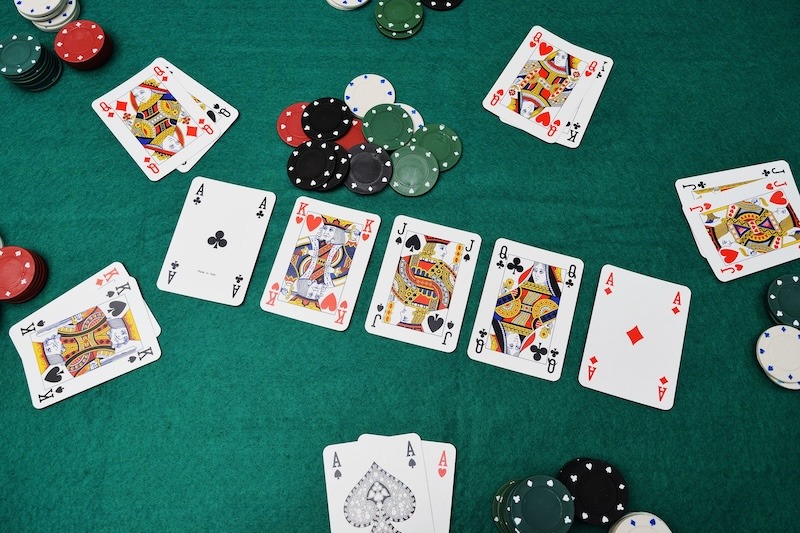
In modern Poker, Range Thinking is the key that allows players to escape the trap of intuitive “hand guessing” and approach the game with probability and logic. By understanding how to construct, narrow, and compare ranges, you will become more proactive in every betting decision. In this article, Sunwin provides the foundational knowledge and practical examples to help players systematically build a more professional and effective range-based mindset. Understanding the...

In an increasingly competitive Poker world, hand-reading skills and intuition are no longer enough to create a sustainable advantage. Modern players are forced to approach Poker as a strategic game, where every decision must have a clear foundation. Understanding and applying GTO (Game Theory Optimal) not only helps you avoid being exploited by opponents but also builds a more disciplined, objective, and effective playing mindset in the long run. What...
In poker, making the right decision does not depend on luck but on how players understand and apply core mathematical concepts. Outs, odds, and pot odds are the foundation for evaluating the possibility of improving a hand and the value of each call. Through clear analysis and practical examples, Sunwin provides useful poker knowledge, helping readers form a logical, disciplined, and more effective mindset in every hand. Understanding the Concept...