Sunday, December 28, 2025
In modern sports betting, winning or losing a single bet is no longer the sole measure of a player’s ability. Instead, experts use a metric called Closing Line Value (CLV) to measure and evaluate the quality of a wager. Let’s dive into the details to understand how this metric works.
In simple terms, Closing Line Value (CLV) is a metric used to assess the value of the odds you locked in compared to the market’s “Closing Line.” The Closing Line is the final set of odds published by the bookmaker just before the match officially begins.

Understanding Closing Line Value in Sports
To put it simply, CLV is an indicator that tells you whether you placed your bet earlier and better, or later and worse than the rest of the market. It is a comparison between the odds you secured and the closing line.
To move beyond theory, let’s look at an example: Suppose you place a bet on Team A to win at odds of 2.10. Just before kick-off, the odds drop to 1.85. This signifies that the market now views Team A’s chances of winning much higher than when you placed your bet. In this scenario, you have achieved a Positive CLV because you “bought” at a higher price than what the market was willing to accept at the closing time. Conversely, if you bet on Team A at 1.85 and the closing line rises to 2.05, you have a Negative CLV.
Nowadays, Closing Line Value is regarded as one of the most critical metrics in sports betting because:

CLV is important because it can optimize betting efficiency.
Furthermore, on online platforms like Sunwin, CLV reflects market efficiency. By understanding and tracking CLV, players can transition from a “luck-based” gambling habit to a mindset of scientific analysis and research.
In the online betting sphere, where odds fluctuate rapidly by the second and minute, the CLV metric becomes even more vital. Online platforms such as Sunwin update their lines in real-time, enabling players to:

CLV applies to high-liquidity betting options.
However, while CLV is an optimal tool for efficiency, it still has specific limitations that you must understand. Recognizing these limits helps players use CLV as a realistic benchmark and avoid the illusion of “perfect prediction.” CLV is most effective in high-liquidity markets such as Asian Handicap, 1×2, or Full-time Over/Under. For side bets, player props, or niche markets with low participation, the closing line tends to be less accurate; therefore, CLV in these cases should be treated as a reference rather than an absolute standard. Furthermore:
In summary, Closing Line Value (CLV) is not a tool designed to predict match outcomes. Instead, it serves as a metric for the quality of your betting decisions. Consistently tracking your CLV will help you build a long-term mindset and approach sports betting with scientific efficiency.
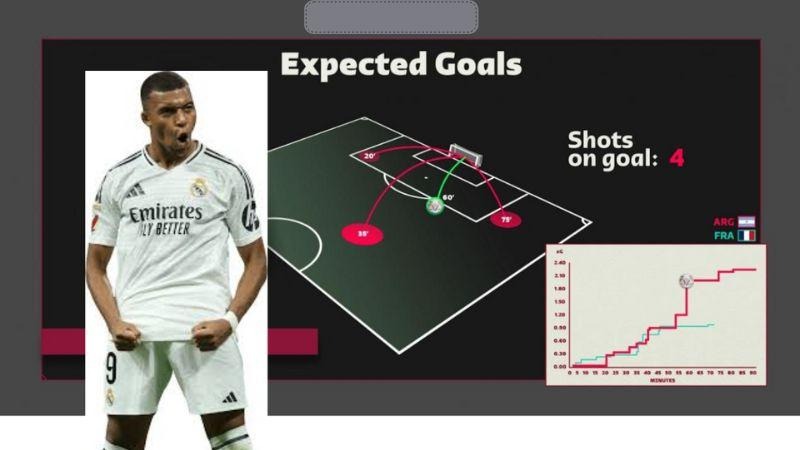
In modern football, experts, coaches, and fans use numerous metrics to dissect a match. One of the most prominent is Expected Goals (xG). So, what exactly is Expected Goals? How is it calculated, and what role does it play? Let’s dive into this in-depth analysis to gain a more accurate perspective when analyzing football data. 1. What is Expected Goals (xG)? Expected Goals, commonly abbreviated as xG, is a key...

Sports betting is a form of entertainment with a high degree of risk. Outcomes depend not only on the strength or form of a team but are also influenced by various factors, most importantly Line Movement and Market Adjustment. So, what are they, and how do they impact the way the betting market operates? In this article, Sunwin will clarify everything to give you the most comprehensive overview. 1. Overview:...

In modern sports, accessing data is easier than ever. With just a few clicks, you can reach a wide array of vital sports metrics such as attacking efficiency, Expected Goals (xG), and more. However, to avoid falling into the trap of misconceptions and to maintain objectivity when analyzing a match, you must clearly understand Data Bias and Sample Size. 1. What is Data Bias in Sports? In sports data analysis,...