Saturday, December 27, 2025
In Texas Hold’em, starting hands are the foundation for every strategic decision in the subsequent rounds. A clear understanding of starting hands helps players select cards based on probability, position, and discipline, thereby limiting risks and optimizing long-term advantages. Through this article, Sunwin provides useful poker knowledge presented in an academic yet accessible manner, supporting readers in building a correct and effective pre-flop mindset.
In Texas Hold’em, starting hands serve as the cornerstone of a player’s entire strategic structure. Poker is not merely a game of chance; in essence, it is a discipline of mathematics, probability, and optimal decision-making under conditions of imperfect information. Therefore, selecting reasonable starting hands is the first step in helping a player build a long-term advantage.
“Starting hands” are understood as the two hole cards that each player receives as soon as the hand begins. Based on statistical probability, poker researchers have shown that not all starting hands possess equal value. Some starting hands hold a significantly higher win rate when facing random hands, while many other hands are almost always at a disadvantage if played without selectivity.
The core significance of understanding starting hands lies in the ability to make mathematically profitable decisions. When players only enter a hand with starting hands that have good equity (win probability), they are proactively placing themselves in situations where the odds of victory lean in their favor. This is the foundation of a disciplined and sustainable playing style.
However, the strongest hands do not always appear. Therefore, an effective strategy is not just about waiting for big cards, but also about expanding one’s hand range in a controlled manner. Combining the quality of starting hands with table positioning helps players reduce risk when using weaker hands, while simultaneously optimizing information advantages when acting in a late position. It is this combination that creates the practical value of the starting hands concept in modern poker.

Starting hands: The meaning of the starting hand
In Texas Hold’em, clearly understanding starting hand groups is a crucial step in building an effective pre-flop strategy. Each starting hand has a different statistical value, and knowing whether to play or fold is not just based on feeling, but on rankings classified by average winning probabilities. Sunwin has synthesized 46 starting hands into 8 groups, from A to H, ranging from the strongest to the weakest within the range of hands still worth playing in many situations.
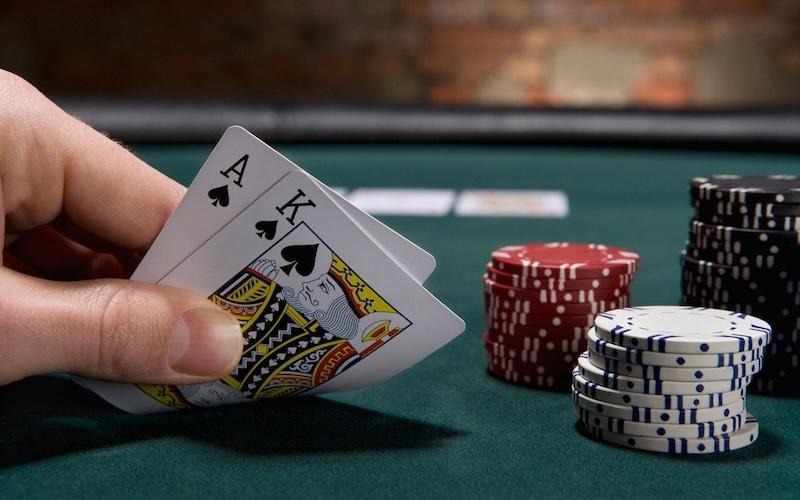
Group A consists of the strongest starting hands you can be dealt. This group includes hands like AA, KK, and AKs (Ace-King suited)—these hands should almost always be played and are typically raised immediately when it is your turn.
Group B includes AK offsuit and QQ; they are still very strong but slightly inferior to the suited versions and require considering opponents before playing aggressively.
Group C contains medium pairs like JJ and TT, which still possess strength but are easily dominated by higher overcards on the flop.
Groups D through E expand into decent hands such as AQs, AQ, AJs, 99, 88, AJ, ATs, KQs, and other medium pairs. These hands play well when you are in a favorable position or when the pot has not been heavily attacked.
Group F contains hands like AT, KQ, KJs, QJs, and small pocket pairs—the strategy for playing this group depends heavily on position and how opponents are playing.
Groups G and H are the weakest hands still within a controlled playing range, including suited connectors and weak broadway hands like A9s-A2s, KTs, QTs, JTs, 87s, 76s, KJ, KT, and QJ. These hands can be played in multi-way pot situations or when you are in the final position, but they should not be underestimated and can easily lead into traps if there is heavy betting pressure.
Mastering these hand groups helps you make better pre-flop decisions, minimize mistakes, and build a disciplined playing style—something every player on any poker platform needs.
The introductory lesson groups you need to master.
Ranking starting hands during the preflop stage helps players make fast, accurate, and consistent decisions. In practice, starting hand charts are built based on the average winning probability of each hand against random hands, while also considering position and the number of players. Based on these charts, starting hands are typically classified into three main groups as follows:
These are the top-tier hands in every starting hand ranking. Hands in this group usually include AA, KK, QQ, JJ, and AK suited. According to standard classification, these hands have superior equity and rarely find themselves at a disadvantage before the flop. In most ranking charts, premium hands are always recommended to be played from any position and should typically be raised to maximize value. When holding this group of cards, players hold a clear mathematical advantage right from the start of the hand.
This group includes hands with good value but which do not reach the “dominant” level of premium hands. Preflop charts usually rank TT-88, AQ, AJs, KQs, AJ, and ATs in this category. These hands are considered “playable hands,” meaning they can participate in the hand in many situations but require careful consideration of position and previous actions. In classification charts, this group is often marked as “raise or call depending on the circumstances.”
This is the group located at the bottom of starting hand rankings, including suited connectors (JTs, 98s, 87s), low suited aces (A9s-A2s), and some weak broadway hands. These hands are not strong in terms of showdown value but have the potential to form straights or flushes. Therefore, they are only considered playable when in a favorable position or in low-pressure pots. According to preflop ranking classifications, this is the group that requires the highest level of discipline when choosing to play.

Starting Hands Ranking (Preflop Ranking)
Illustrative Example for Players
To better understand the value of starting hands, let’s look at a simple illustrative example at the pre-flop stage with Sunwin. Suppose a Texas Hold’em game has six players. Player A sits in an early position and is dealt Ace of Hearts and King of Hearts ($A\heartsuit K\heartsuit$). Player B sits in a late position and holds 9 of Spades and 8 of Spades ($9\spadesuit 8\spadesuit$). On the starting hand rankings, Ace-King suited is ranked in the “premium” group, while 9-8 suited is only in the “potential” group.
In terms of probability, Ace-King suited has clearly higher equity compared to most random hands. This hand has the ability to create a strong top pair, straight, or flush, and often leads in pre-flop ranking charts. Conversely, 9-8 suited is not strong from the start, but has value when considering the ability to create a straight or flush if the community cards are suitable.
If we put these two hands into a comparison table, we can see a clear difference. Premium groups like Ace-King suited are evaluated as should-participate in the hand at most positions because of the available mathematical advantage. Meanwhile, suited connectors like 9-8 suited are only considered playable when the player has a favorable position and less pressure from opponents.
This example shows that starting hands are not only evaluated individually but need to be placed in the context of the overall ranking and classification. Therefore, starting hand comparison tables are widely used as an academic tool to help players understand which hand brings a long-term advantage.

Example for players
Understanding and selecting the right starting hands is the fundamental cornerstone of any Texas Hold’em strategy. Through hand rankings, classification, and pre-flop principles, players can make decisions based on probability rather than emotion. By combining appropriate starting hands with positional awareness and disciplined play, you will build a sustainable advantage and minimize long-term risks.

In modern Poker, Range Thinking is the key that allows players to escape the trap of intuitive “hand guessing” and approach the game with probability and logic. By understanding how to construct, narrow, and compare ranges, you will become more proactive in every betting decision. In this article, Sunwin provides the foundational knowledge and practical examples to help players systematically build a more professional and effective range-based mindset. Understanding the...

Variance and downswing are two pivotal concepts in poker, reflecting the discrepancy between expected results and actual outcomes, as well as the prolonged losing streaks that players must face. Clearly understanding their impact helps you build a strategy for hand selection, manage your capital, and maintain a stable psychological state while playing. This foundation allows for sustainable skill development—a point often emphasized in Sunwin’s instructional guides to help players enhance...

In modern poker, correctly reading board texture is not just an advanced skill but the very foundation for making accurate post-flop decisions. By clearly understanding whether a board is “dry” or “wet,” its relationship with ranges, and the advantages held by each side, players can become more proactive in every situation. This knowledge is particularly useful when practicing and refining tactical thinking on online poker platforms like Sunwin. What is...