Saturday, December 27, 2025
In poker, card-reading and calculation skills only reach their full potential when players master their own emotions. Reality shows that many incorrect decisions do not stem from a lack of knowledge, but rather from losing psychological control when losing, winning, or being under pressure. In this article, Sunwin focuses on clarifying the role of poker psychology, common emotional states, and how they directly impact playing strategy, thereby helping players build a solid mindset and a more resilient playing style.
In poker, it is often said that the cards only decide a small part, while psychology is the factor that governs long-term results. The reason is that poker is not merely a game of chance, but a continuous sequence of decisions made under conditions of incomplete information. Every decision to bet, call, raise, or fold is strongly influenced by the player’s emotional state at that moment.
Poker psychology is most clearly manifested in the decision-making process. When players maintain their composure, they tend to logically analyze hand strength, position, opponent actions, and probability ratios. Conversely, when emotions overwhelm them, decisions often become reflexive, lack consideration, and easily deviate from the original strategy. Just one moment of haste can lead to an incorrect call, an irrational bluff, or chasing hands that no longer hold value.
The difference between playing with emotion and playing with reason lies in how players control themselves. Emotional play often appears after situations like consecutive losses, being bluffed by an opponent, or encountering a bad beat. At that point, players easily fall into a state of wanting to “recover losses,” expanding their hand range, and betting more than necessary. Meanwhile, rational play is when players accept short-term results and focus on making the right decisions instead of immediate outcomes.
The consequences of uncontrolled decision-making are very clear. Players can lose their advantage, break their bankroll structure, and push themselves into high-risk situations. In the long run, allowing emotions to dominate will make one’s playstyle predictable and unstable. Therefore, psychology is always considered a vital foundation, helping poker players maintain performance and develop sustainably.
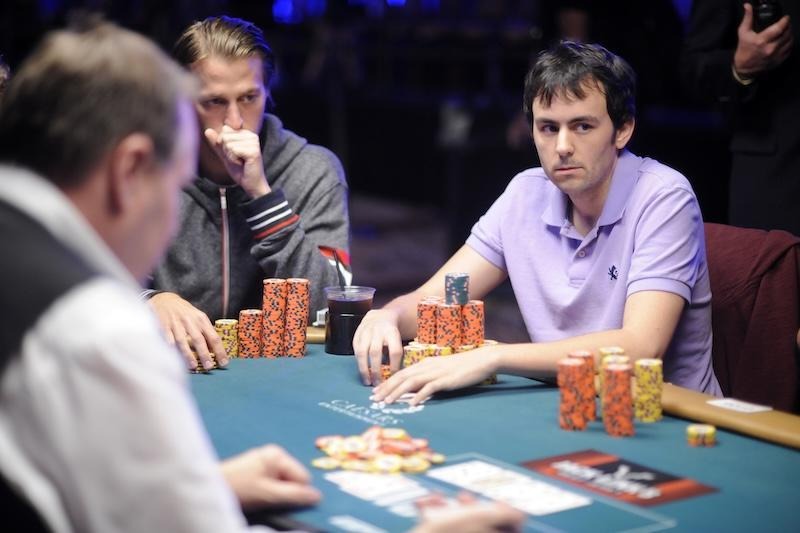
Why do people often talk about psychology when playing poker?
In poker, psychological fluctuations refer to an unstable mental state where emotions change continuously and directly affect how a player makes decisions. This is a very common phenomenon, especially among players who do not yet have a solid psychological foundation. One of the most common forms is fluctuations caused by a losing streak. When multiple losses occur in a short period, players often lose patience, begin to doubt their strategy, and tend to play more recklessly to recover their losses.
A second form is the fluctuation when being bluffed. Realizing that an opponent has just beaten you with a bluff can create a sense of frustration or hurt your ego. This easily leads to players trying to “retaliate” in subsequent hands, calling or re-raising without a sound basis just to prove themselves. Additionally, bankroll pressure is a major cause of psychological fluctuations. When playing at stakes that exceed the allowed bankroll, every decision becomes heavier than usual. Players fear losing money, leading to a style of play that is either too cautious or, conversely, involves reckless betting because they feel they have nothing left to lose.
Contrary to a state of instability, overconfidence is also a dangerous psychological state in poker. After a winning streak or a few successful hand reads, players can easily believe they are “outplaying” all their opponents. If not controlled, this confidence quickly turns into subjectivity, causing players to expand their hand range, bluff too much, or ignore warning signals from the table.
When falling into this state, players often underestimate their opponents and believe that their personal skills are enough to compensate for risky decisions. As a result, they are prone to making strategic mistakes, losing large pots unnecessarily, and squandering previously accumulated advantages. In poker, confidence is only truly valuable when accompanied by discipline and the ability to objectively self-assess.
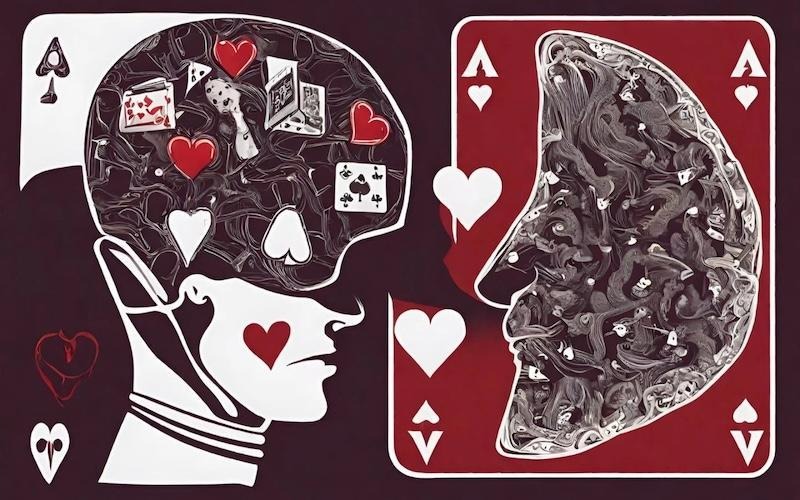
Common psychological states in poker
Psychology has a direct influence on the decision to select starting hands, especially at the pre-flop stage – where the strategic foundation of the entire hand is formed. When players maintain a stable psychological state, they typically adhere to a pre-established hand range based on position, stack size, and opponents. However, when emotions take over, this range can easily be distorted.
In a state of stress or during a losing streak, players tend to play too tight for fear of making mistakes. They overlook many potential hands simply due to risk aversion, leading to missed opportunities to apply pressure on opponents. Conversely, when excited or eager to recover losses, players expand their starting hands uncontrollably, calling or raising with weak cards that are unsuitable for their position. These distortions make the gameplay inconsistent and easy for opponents to exploit.
Bluffing and calling are two actions that require a high balance between analysis and emotional control. When the psychological state is unstable, players often make bluffing decisions at the wrong time. For example, they may bluff simply because they feel frustrated after a loss, or want to prove themselves after being outplayed by an opponent. Such bluffs often lack a logical narrative and are easily caught.
On the other hand, psychology also strongly affects the decision to call. Players are prone to calling too much because they do not want to believe they are losing, or because they are curious and want to “see” the opponent’s cards. This is a form of calling based on emotion rather than a strategic basis. In both cases—uncontrolled bluffing and emotional calling—the risks increase and long-term effectiveness decreases. Therefore, the ability to maintain a steady mindset is the factor that helps players make more accurate bluffing and calling decisions.
How does poker psychology affect playing strategy?
The first step to controlling emotions in poker is the early recognition of negative psychological signs. States such as frustration after a big loss, impatience when dealt continuous bad hands, or the urge to “win it back” quickly are all warning signals. When players become aware that emotions are starting to influence their thinking, they have the chance to stop before making a wrong decision. Asking yourself, “Am I playing based on strategy or emotion?” helps create the necessary distance between feeling and action.
Establishing limits is a crucial principle for maintaining a stable mindset. These limits can be related to the bankroll, the number of hands played, or the time spent at the table. When a maximum acceptable loss is predetermined, players avoid psychological pressure when results are not as expected. Clear limits also help eliminate the feeling of needing to recover losses immediately, thereby maintaining a more disciplined and consistent playing style.
Continuing to play is not always the best option. The advice that experts at Sunwin have for you is to take breaks at the right time to help rejuvenate your spirit and regain alertness. Simply leaving the table for a few minutes, taking deep breaths, or doing something other than poker can help emotions settle. Taking a break does not mean giving up; it is a proactive way to protect the quality of your decisions in subsequent hands.
A clear decision-making system helps reduce the impact of emotions. When every action is based on factors such as hand strength, position, stack size, and opponent actions, players are less likely to be swept away by fleeting emotions. This habit creates consistency, turning poker into a game of logical thinking rather than emotional reflex.
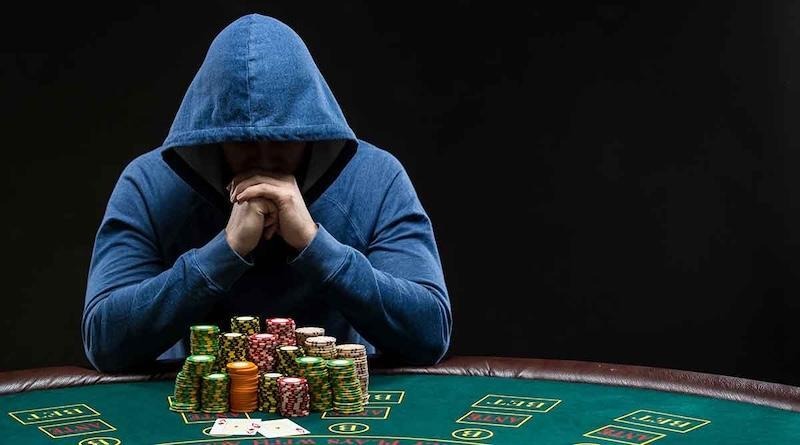
Principles of emotional control when playing poker.
Poker psychology and the ability to control emotions are the foundations that determine the difference between a short-term player and a sustainable player. By clearly understanding common psychological states, identifying the influence of emotions on strategy, and applying appropriate control principles, players will make more sober decisions. In the long run, psychological stability not only helps limit mistakes but also enhances poker performance in a consistent and disciplined manner.
Variance and downswing are two pivotal concepts in poker, reflecting the discrepancy between expected results and actual outcomes, as well as the prolonged losing streaks that players must face. Clearly understanding their impact helps you build a strategy for hand selection, manage your capital, and maintain a stable psychological state while playing. This foundation allows for sustainable skill development—a point often emphasized in Sunwin’s instructional guides to help players enhance...

HUD (Heads-Up Display) is a powerful tool that helps players track opponents’ habits and behaviors, enabling more accurate decision-making and strategic optimization in every hand. Beyond gaining a long-term edge, a HUD allows you to analyze your own gameplay to identify leaks and systematically improve your skills. When playing on Sunwin, understanding how to use a HUD correctly will help you effectively exploit opponents while avoiding potential risks, ensuring a...

In Poker Tournaments, winning does not just come from card-playing skills; it depends heavily on how you make decisions through each stage of the event. ICM (Independent Chip Model) is the tool that helps players understand the real-world cash value of their chips and the impact of every decision on the final standings. By mastering ICM, you will know exactly when to take risks to break through and when to...