Saturday, December 27, 2025
In poker, making the right decision does not depend on luck but on how players understand and apply core mathematical concepts. Outs, odds, and pot odds are the foundation for evaluating the possibility of improving a hand and the value of each call. Through clear analysis and practical examples, Sunwin provides useful poker knowledge, helping readers form a logical, disciplined, and more effective mindset in every hand.
In poker, especially Texas Hold’em, outs is a foundational concept that helps players evaluate the possibility of improving their hand in the subsequent rounds. Simply put, outs are the cards not yet revealed in the hand that, if dealt, would help your current hand become stronger. Mastering this concept allows players to make decisions based on probability instead of emotion.
Outs are typically divided into two main types: clear outs and potential outs. Clear outs are cards that will definitely improve the hand in a beneficial way, such as when you have four cards of the same suit and only need one more of that suit to complete a flush. Conversely, potential outs are cards that may improve the hand but still carry hidden risks, such as creating a pair or a weak straight that could be overtaken by an opponent. Distinguishing between these two types of outs is crucial to avoid overestimating the actual strength of the hand.
Counting outs accurately is a mandatory skill for serious poker players. The basic principle is to clearly identify the goal of improving the hand, then list the remaining cards in the deck that can help achieve that goal. Players must avoid double-counting outs or including cards that, even if they appear, do not provide a real advantage.
Outs are closely linked to the probability of improving a hand. The higher the number of outs, the higher the chance of improving the hand at the turn or river. In practice, players often apply quick estimation rules to convert the number of outs into a probability percentage, thereby comparing it with pot odds to make reasonable decisions. Therefore, outs are considered the bridge between hand reading and mathematical thinking in poker.
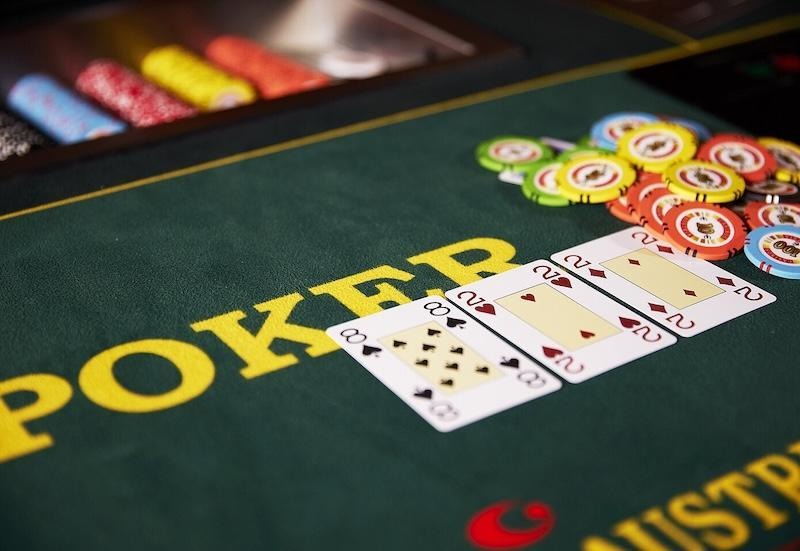
Understanding the concept of Outs in Poker
In poker, outs are not just numbers to memorize, but tools that help players clearly visualize the path to improving their hand. Below, Sunwin will point out two common situations showing how outs directly impact the strength of a hand.
Suppose you are holding Ace of Clubs and Jack of Clubs. The flop shows 7 of Clubs, 10 of Clubs, and 2 of Diamonds. At this point, you have four cards of the same suit and are waiting for a flush. The remaining clubs in the deck are your clear outs. If there are nine clubs that have not yet been revealed, then every time the turn or river shows a club, your hand will be improved to a flush, a very high-value hand.
Another situation is when you hold 8 of Hearts and 9 of Spades, and the flop comes 6 of Diamonds, 7 of Clubs, and King of Hearts. At this moment, you have a double-ended straight draw, meaning you only need a 5 or a 10 to appear to complete the straight. The four remaining 5s and four remaining 10s form eight outs.
However, these are potential outs because even if you complete the straight, you still need to observe the possibility of an opponent having a stronger hand. This example shows that outs not only help improve the hand but also help players evaluate the actual level of risk and opportunity in the hand.

Outs – How can these cards help you?
After understanding the concept of outs and how the remaining cards can improve a hand, the next step in poker thinking is to learn about odds and pot odds. These are the tools that help players convert the number of outs and probabilities into specific decisions: whether to continue calling or to fold.
In poker, odds are understood as the ratio expressing the likelihood of an event occurring versus it not occurring. For example, when you are waiting for a card to complete a hand, the odds indicate the probability of that card appearing in the next deals. Odds are commonly used to evaluate the probability of improving a hand based on the number of outs a player has.
Pot odds is a more practical concept and is used directly in the decision-making process. Pot odds is the ratio between the amount of money you need to put in to call and the total amount of money you can win in the pot after calling. In other words, pot odds tell you whether the current investment is worth it compared to the potential reward.
The method for calculating pot odds is quite simple, making it particularly suitable for beginners. Suppose the pot currently has 100,000 and an opponent bets 20,000. If you call, the total pot will be 140,000 and you need to spend 20,000 for a chance to win that amount. In that case, your pot odds are 20,000 compared to 140,000, which is approximately 14 percent. Next, you compare this figure with the probability of improving your hand based on outs. If the win probability is higher than the pot odds, the decision to call is mathematically sound.
Combining the understanding of outs with pot odds helps players make informed decisions, reduces reliance on feelings, and builds a more disciplined playing style in poker.

Outs – How can these cards help you?
In poker, outs, odds, and pot odds do not exist in isolation but form a logical chain that helps players make rational decisions in every hand. By understanding and correctly combining these three concepts, players can shift from emotional gameplay to thinking based on probability and expected value.
Outs are the starting point of the analytical process. Once you identify which cards you are waiting for to improve your hand, the number of outs indicates the actual potential of that hand. For example, when waiting for a flush with nine outs, you know there are still many opportunities for your hand to become stronger on the turn or river. However, knowing the outs alone is not enough to make a decision.
From the outs, players estimate the odds, which is the likelihood of improving the hand in the next deals. Odds help answer a crucial question: what is the probability of completing my hand? This is the step of converting the number of cards into a probability, allowing players to evaluate the feasibility of calling.
Finally, pot odds place the probability factor into the context of actual betting. Pot odds compare the amount of money you need to spend with the total amount you can win in the pot. When placing odds and pot odds side by side, players have a basis for their decision. If the probability of improving the hand from outs is greater than or equal to the pot odds, calling is generally considered mathematically correct. Conversely, if the pot odds are not attractive enough compared to the odds, folding is the safer choice.
The link between outs, odds, and pot odds helps players not only know if they can win but also determine if calling is worth it. This is the foundation of modern poker thinking, where every decision is based on calculation and discipline instead of hoping for luck
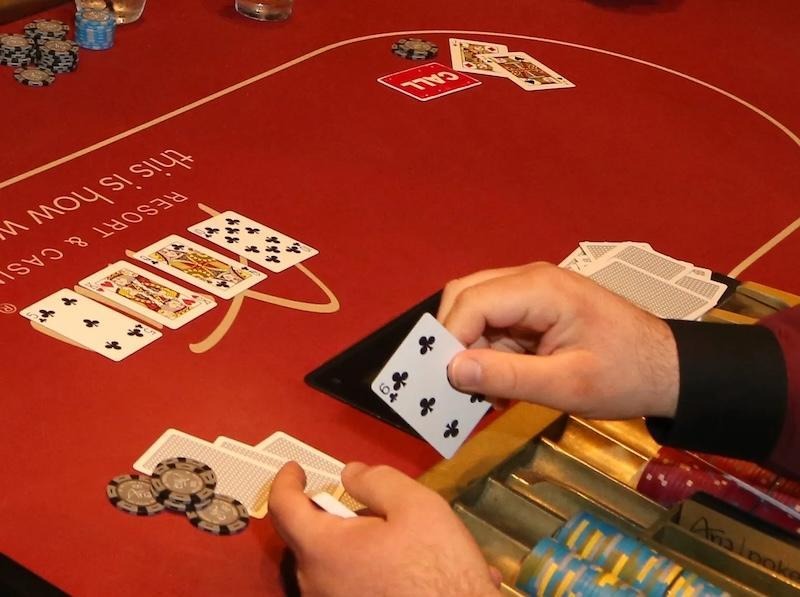
The relationship between outs, odds, and pot odds in a poker game.
Outs, odds, and pot odds are the three core concepts that help poker players make accurate and well-founded decisions. By clearly understanding how to count outs, convert them into probabilities, and compare them with pot odds, players can correctly evaluate the value of each situation. Through the knowledge shared by Sunwin, the consistent application of these principles helps reduce risk, enhance discipline, and build a sustainable advantage in the long term.

Bluffing is one of the factors that creates tactical depth in poker, but it is also a double-edged sword if used without control. Clearly understanding the nature of bluffing, the appropriate timing, limits, and potential risks will help players make more sober decisions. In this article, Sunwin provides insightful knowledge to help readers build a well-founded and disciplined bluffing mindset during their poker sessions. The Concept of Bluffing in Poker...

Variance and downswing are two pivotal concepts in poker, reflecting the discrepancy between expected results and actual outcomes, as well as the prolonged losing streaks that players must face. Clearly understanding their impact helps you build a strategy for hand selection, manage your capital, and maintain a stable psychological state while playing. This foundation allows for sustainable skill development—a point often emphasized in Sunwin’s instructional guides to help players enhance...

In modern poker, correctly reading board texture is not just an advanced skill but the very foundation for making accurate post-flop decisions. By clearly understanding whether a board is “dry” or “wet,” its relationship with ranges, and the advantages held by each side, players can become more proactive in every situation. This knowledge is particularly useful when practicing and refining tactical thinking on online poker platforms like Sunwin. What is...