Saturday, December 27, 2025
In an increasingly competitive Poker world, hand-reading skills and intuition are no longer enough to create a sustainable advantage. Modern players are forced to approach Poker as a strategic game, where every decision must have a clear foundation. Understanding and applying GTO (Game Theory Optimal) not only helps you avoid being exploited by opponents but also builds a more disciplined, objective, and effective playing mindset in the long run.
GTO (Game Theory Optimal) in poker is a concept referring to a playing style based on game theory and mathematics, with the goal of building a strategy that cannot be exploited by opponents. Instead of reacting emotionally or depending entirely on how others play, GTO focuses on choosing the right actions with balanced frequencies, helping players maintain a long-term advantage in any situation.
When applying GTO, a player does not simply bet or bluff randomly; they perform those actions according to logical ratios. For example, you will bluff with a certain portion of your hands and value bet with the rest so that an opponent cannot easily guess whether you hold a strong or weak hand. Thanks to this balance, no matter how the opponent changes their playstyle, a GTO strategy ensures you do not suffer a mathematical disadvantage.
A key point regarding GTO is: if two players both apply a perfect GTO strategy, the long-term result will be a break-even point. However, in most real-world situations, opponents do not play perfectly. In these cases, GTO still helps you achieve stable profits by avoiding mistakes that could be exploited.
Nevertheless, poker is a game with too many variables, so an absolutely complete GTO strategy does not yet exist for humans. It is also impossible for a person to calculate perfect GTO in real-time. Therefore, poker solvers were created as tools to simulate GTO strategies, helping players learn to think in terms of hand ranges, action frequencies, and balance. Understanding GTO does not turn you into a machine, but it helps you build a more scientific and sustainable foundation for poker thinking.
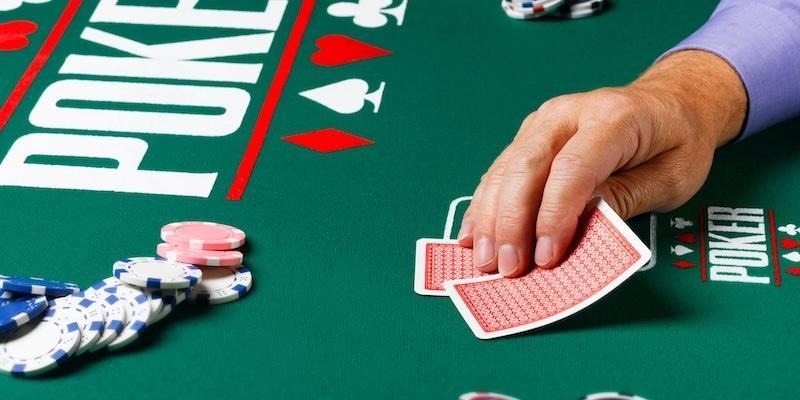
What is GTO and why is it used in poker?
Many poker players often assume that profits primarily come from exploiting weak or unfocused opponents, so why care about GTO—a strategy that seems complex and math-heavy? In reality, GTO serves as the foundation that helps players maintain long-term effectiveness and comprehensively enhance their strategic thinking.
The first reason GTO is vital is that a balanced strategy prevents you from being exploited, regardless of whether your opponent is strong or weak. When playing based on GTO, actions such as betting, bluffing, or checking are distributed with logical frequencies, making it impossible for opponents to find clear weaknesses to capitalize on. This is particularly crucial when facing elite players, where any small deviation in strategy can be severely punished.
The second reason is that GTO acts as a “baseline” for adjusting your tactics. Once you have a GTO foundation as your root, shifting to an exploitative playstyle becomes easier and more controlled. Instead of making emotional adjustments, the player knows exactly where and why they are deviating from GTO, thereby optimizing profit while maintaining a tight strategic structure.
Furthermore, GTO is extremely useful during hand reviews and analysis. Under GTO thinking, players do not just evaluate the two cards they hold; they must understand how to act with their entire range in every situation. You need to know which hands to bet, bluff, or check with to maintain balance. If you only value bet without bluffing, or bluff too much without holding strong hands, opponents will quickly adjust and exploit you.
Understanding and applying GTO helps poker players think systematically, make logical and consistent decisions, and ultimately elevate their skill level to maintain a long-term edge.
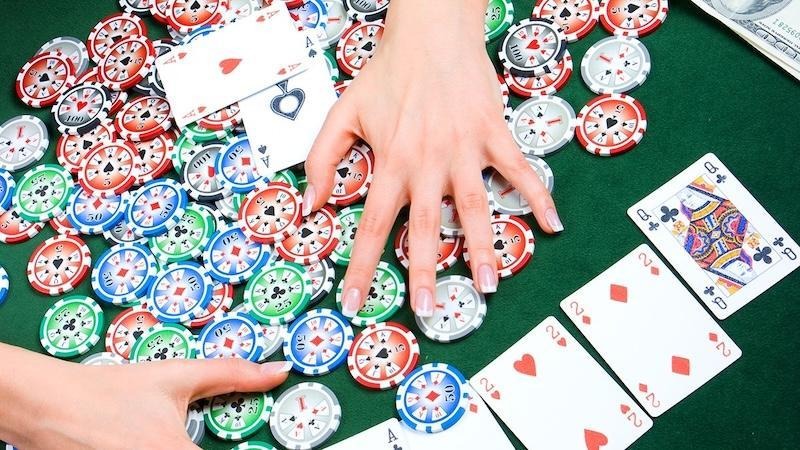
Tầm quan trọng của GTO trong bài Poker
To visualize GTO easily, let’s consider a common situation on the river. The pot is $100$, and you bet another $100$. Your opponent must put in $100$ for a chance to win a total pot of $200$, which is equivalent to 2:1 pot odds. This means the opponent needs to win at least 33% of the time to break even. From here, GTO dictates that your betting range should consist of 33% bluffs and 67% value bets. Below are four scenarios illustrating why this ratio is optimal.
If you only bet when you have a strong hand, opponents will quickly realize this. They can fold every time you bet, knowing that calling only leads to a loss. Result: You only win small pots and fail to maximize profit. This is a “safe” playstyle but extremely easy to exploit.
Conversely, if you always bluff, the opponent only needs to call every time. Every time you are called, you are guaranteed to lose that bet. In the long run, this strategy causes continuous financial loss and is completely unsustainable.
This ratio sounds “balanced,” but in reality, it is still not optimal. If the opponent always calls, you win when you have a strong hand and lose when you bluff, but the total profit is still lower than it could be compared to a more calculated value-to-bluff ratio. This shows that bluffing too much simply reduces your EV (Expected Value).
This is the “Golden Ratio” according to GTO for a pot-sized bet. Whether the opponent always calls or always folds, your profit remains the same. The opponent is caught in a “dilemma” because no choice allows them to exploit you. Such a perfectly balanced range is the core of GTO in Poker.
Understanding these scenarios will help you build a solid GTO mindset, allowing you to flexibly adjust your tactics to remain safe while maximizing profits at the Poker table.
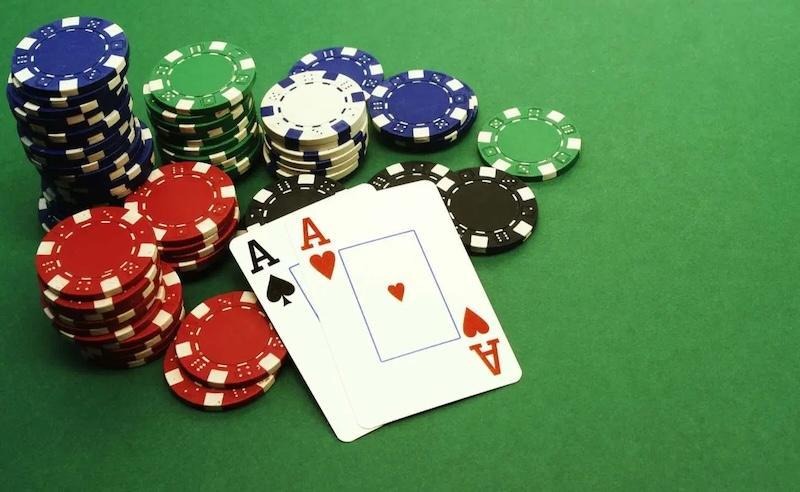
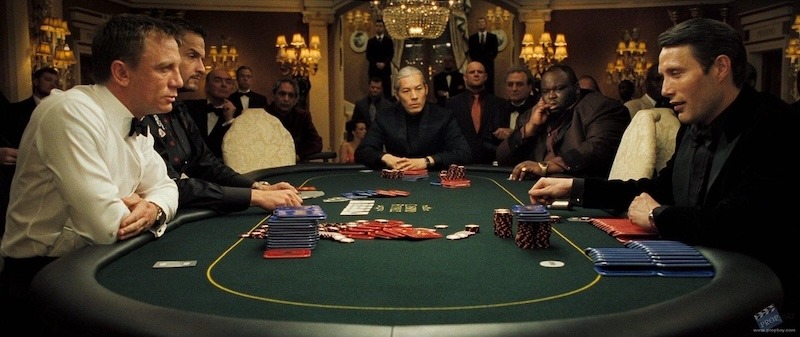
A visual example of GTO in Poker.
Tóm lại, GTO đóng vai trò nền tảng trong việc nâng cao tư duy và chất lượng quyết định khi chơi Poker. Việc hiểu và vận dụng GTO giúp người chơi tránh sai lầm cảm tính, phân tích ván bài khách quan và điều chỉnh chiến lược hiệu quả hơn trước mọi đối thủ. Khi kết hợp kiến thức GTO với trải nghiệm thực tế tại các nền tảng uy tín như nhà cái Sunwin, người chơi sẽ có lợi thế vững chắc để phát triển kỹ năng và hướng tới lợi nhuận bền vững lâu dài.

In Poker Tournaments, winning does not just come from card-playing skills; it depends heavily on how you make decisions through each stage of the event. ICM (Independent Chip Model) is the tool that helps players understand the real-world cash value of their chips and the impact of every decision on the final standings. By mastering ICM, you will know exactly when to take risks to break through and when to...
In modern poker, Exploitative Play and GTO (Game Theory Optimal) are the two most discussed strategic schools of thought, each with its own set of advantages and disadvantages. A clear understanding of their nature, when to apply them, and how to combine these two strategies will empower players to make more accurate decisions. In this article, Sunwin provides the foundational knowledge and real-world examples to help players build an effective...

Bluffing is one of the factors that creates tactical depth in poker, but it is also a double-edged sword if used without control. Clearly understanding the nature of bluffing, the appropriate timing, limits, and potential risks will help players make more sober decisions. In this article, Sunwin provides insightful knowledge to help readers build a well-founded and disciplined bluffing mindset during their poker sessions. The Concept of Bluffing in Poker...